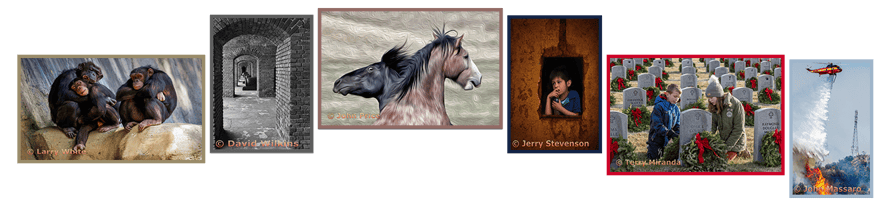
Nature General Definition
See Important Notifications regarding
use of AI and use of inappropriate Subject Matter.
And see new Editing Guidelines.
Any photograph submitted into an S4C Nature competition, including this Nature General competition, must comply with the following Restrictions:
Nature Photography Restrictions
Nature photography records all branches of natural history except anthropology and archaeology. This includes all aspects of the physical world, both animate and inanimate, that have not been made or modified by humans.
Nature images must convey the truth of the scene that was photographed. A well-informed person should be able to identify the subject of the image and be satisfied that it has been presented honestly and that no unethical practices have been used to control the subject or capture the image. Images that directly or indirectly show any human activity that threatens the life or welfare of a living organism are not allowed.
The most important part of a Nature image is the nature story it tells. High technical standards are expected and the image must look natural.
Human-made elements :
Objects created by humans, and evidence of human activity, are allowed in Nature images only when they are a necessary part of the Nature story. Additionally, human-made elements shall be permitted under the following circumstances:
-
When they are an integral part of the nature story, such as a songbird singing atop a fence post, a manmade object used as nest material, or a weather
phenomenon destroying a man-made structure.
-
When they are a small but unavoidable part of the scene, such as an unobtrusive footprint or track in the background*.
- Scientific tags, collars, and bands are specifically allowed.
*Note, this caveat has been greatly relaxed in 2025, both by PSA and FIAP. There are no hard rules as to what extent of evidence of human activity is allowed. The intent is that if human activity does not affect the nature story itself, then these "artifacts" of humankind should not be reason for disqualification.
When photographing at a zoo, sanctuary, or rehabilitation center, it would be construed that the photographer ensured that it’s properly accredited and conforms to best practices.
Photographs of human-created hybrid plants*, cultivated plants, feral animals, domesticated animals, human-created hybrid animals and mounted or preserved zoological specimens are not allowed.
* Fungi, such as mushrooms, are not plants or animals and are therefore allowed.
** Click here for a list of domestic animals (only the first list is applicable). Feral animals are domestic animals gone into the wild or animals in the wild descended from domestic animals.
Photographs of all flowers and plant blossoms, hybrid or not, in any stage of development are ineligible - unless they are acting as an adopted habitat for eligible living organisms that are the main focus of the image*.
* Such as a bee in the wild pollinating in a flower, its adopted habitat for the purpose.
Images taken with subjects under controlled conditions, such as zoos, are allowed.
Controlling live subjects by chilling, anaesthetic or any other method of restricting natural movement for the purpose of a photograph is not allowed.
Infrared images, either direct-captures or derivations, are not allowed.
Borders: In Reality Divisions in S4C (Nature, PhotoTravel, Photojournalism) single white or grey borders of 3, 4, or 5 pixels in width are permitted. Larger, smaller, black, or color borders are not permitted. Entrants are, however, advised that borders of less than 5 pixels may appear incomplete in the smaller images used in the final Catalog due to jpeg artifacts.